Key points in this article:
- AI Tech that just works – Text. Tap. Done.
- Antiquated workflows create friction
- Self-service is no longer optional
- Friction kills engagement
- Mobile-first readiness is the future
Mobile-First Readiness Starts with Self-Service
The next generation of service members expects something different.
They are used to banking from their phones, ordering food from their phones, managing appointments from their phones, and getting answers in seconds without needing to call, wait on hold, leave a voicemail, or follow up by email.
So when readiness workflows still depend on phone calls, email chains, and manual back-and-forth coordination, the experience feels outdated before it even begins.
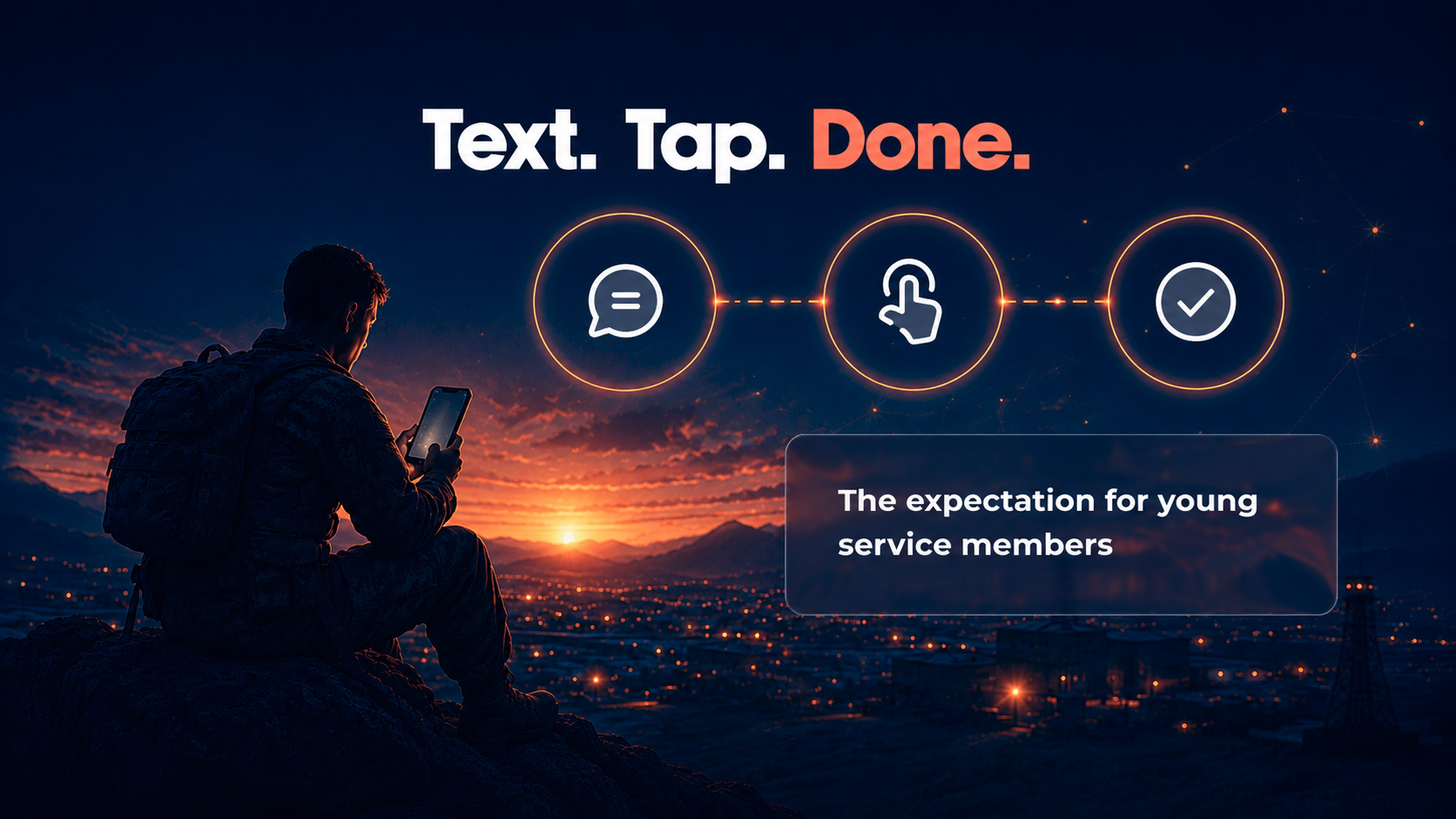
For young service members, the ideal interaction is simple:
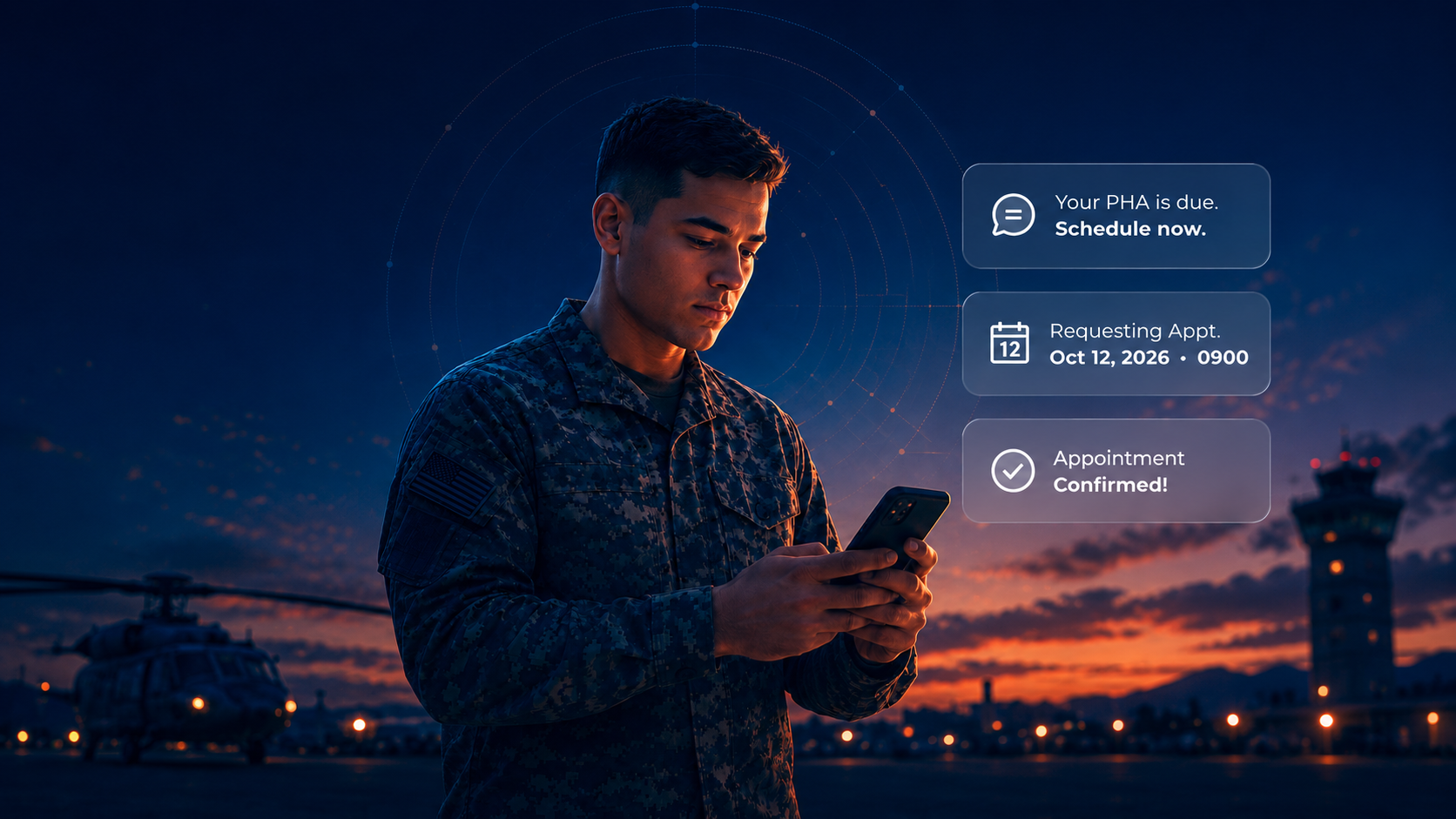
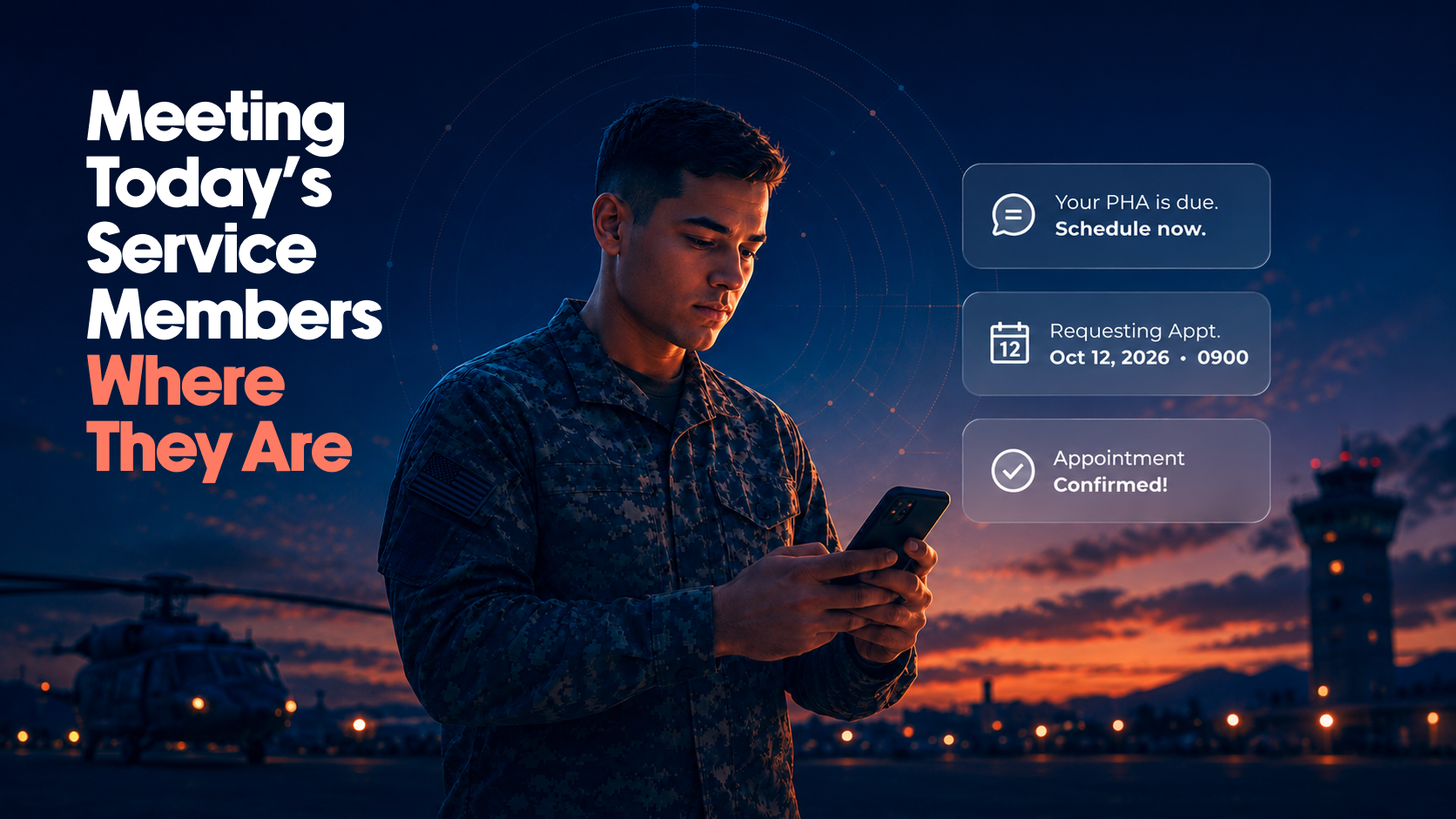
Text. Tap. Done.
They do not want to make unnecessary phone calls. They do not want to wait for a response during clinic hours. They do not want to explain the same request multiple times across disconnected systems. They want to complete the task quickly, clearly, and on their own time.
That expectation is reshaping how military healthcare and readiness teams need to think about access, engagement, and compliance.
Antiquated workflows create friction
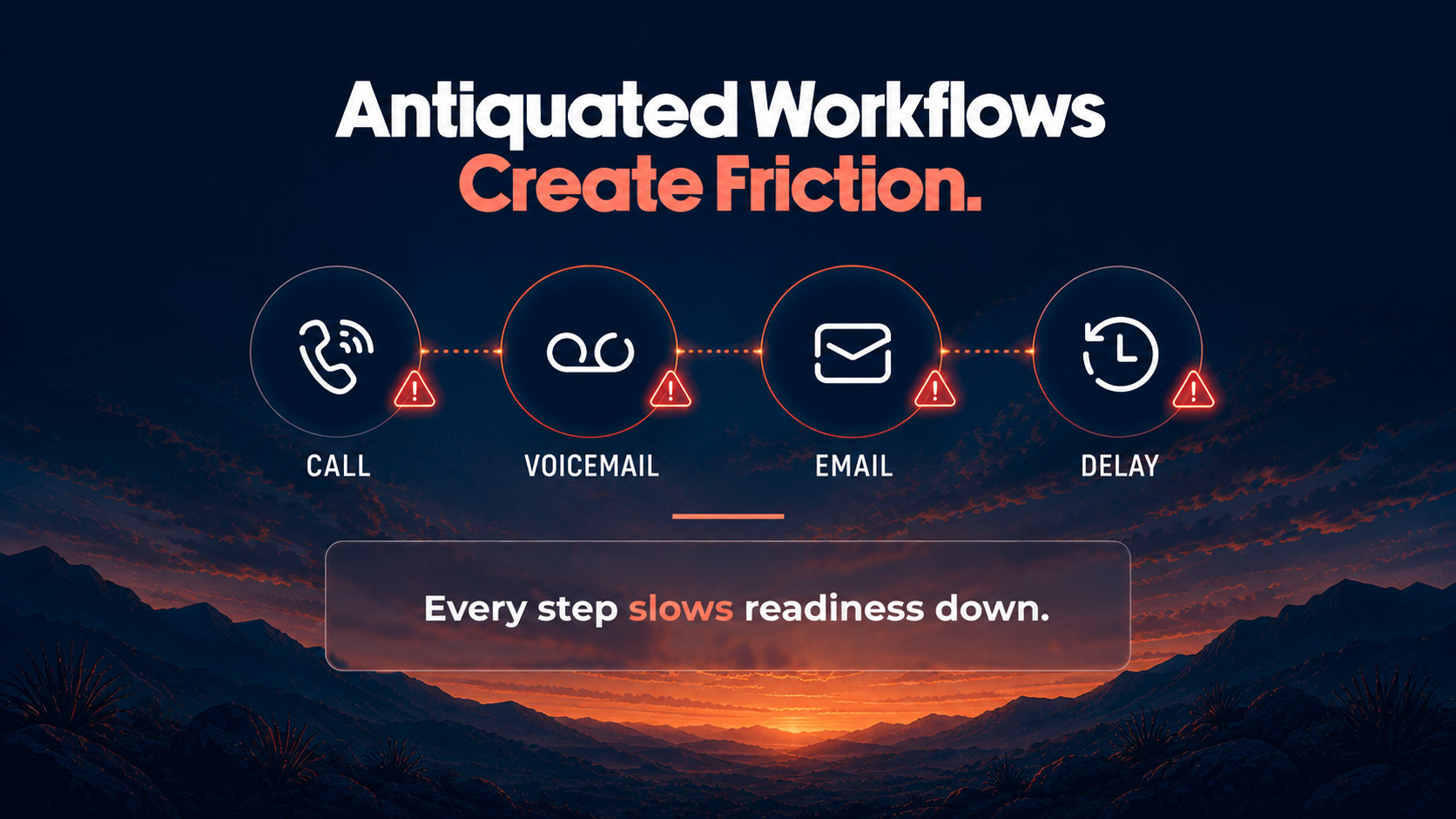
Traditional appointment scheduling often relies on a familiar pattern: a service member receives a reminder, calls the clinic, leaves a voicemail, waits for a call back, misses the call, sends an email, waits again, and eventually gets scheduled.
Every step adds friction.
For staff, that means more administrative work, more manual follow-up, and more time spent chasing down appointments. For service members, it creates delays, frustration, and missed opportunities to stay current on readiness requirements.
The problem is not that service members do not care about readiness. The problem is that the process often asks them to engage in ways that no longer match how they communicate.
Self-service is no longer optional
Today’s service members expect digital self-service to be the default.
They want to schedule appointments from a mobile device. They want to respond when it is convenient. They want to receive clear instructions by text. They want to check appointment details without calling the clinic. They want to complete the next step without needing a live conversation every time.
That matters because readiness is not just about availability. It is about engagement.
When the process is easier, more people complete it. When the process is mobile-friendly, more people respond. When service members can take action on their own time, fewer appointments fall through the cracks.
A mobile-first workflow supports the way they already operate.
On their time, not yours
One of the biggest advantages of digital readiness workflows is that they remove the pressure of real-time coordination.
A service member may not be able to answer a phone call during training, while traveling, between duties, or outside clinic hours. But they can often respond to a text, tap a scheduling link, or confirm an appointment when they have a few minutes.
That flexibility is critical.
Readiness tasks should not depend on whether someone happens to be available when a staff member calls. The best-case scenario is a system that lets service members take action when they are ready, while still giving clinics and leadership the visibility they need.
This is where self-service scheduling and automated communications become powerful.
They reduce unnecessary conversations, eliminate manual phone tag, and allow both sides to move faster.
Antiquated workflows do not match modern behavior
Phone calls and emails are not just slower. They create gaps.
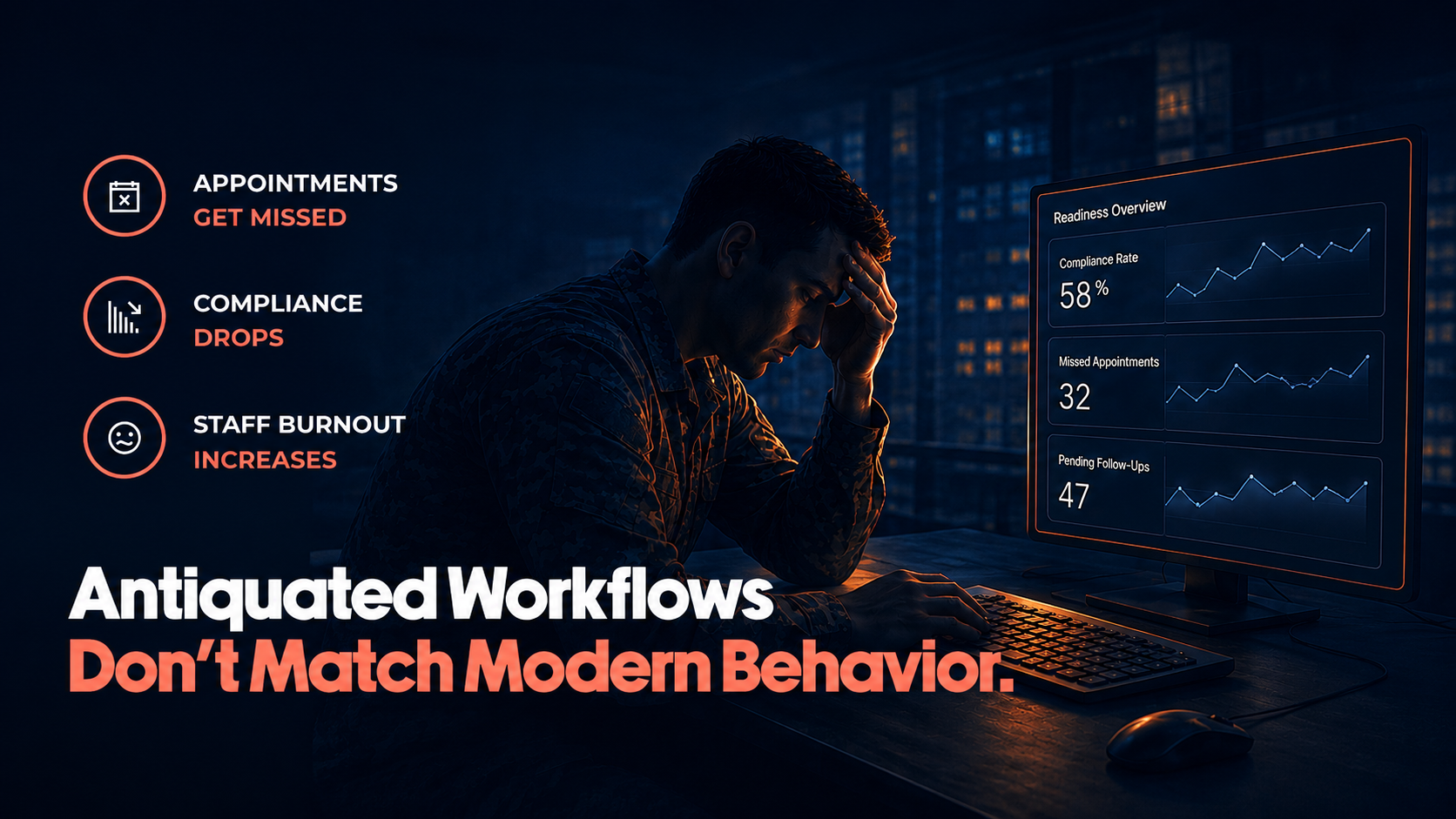
They create delays when messages are missed. They create confusion when appointment details are buried in inboxes. They create extra administrative burden when staff have to manually track who responded, who declined, who needs follow-up, and who still needs to be scheduled.
For readiness teams, those small gaps become operational problems.
Missed appointments affect compliance. Delayed scheduling affects reporting. Manual follow-up consumes staff hours that could be spent on higher-value work.
Modern service members are already mobile-first. Readiness workflows need to be mobile-first, too.
How Outpatient App helps
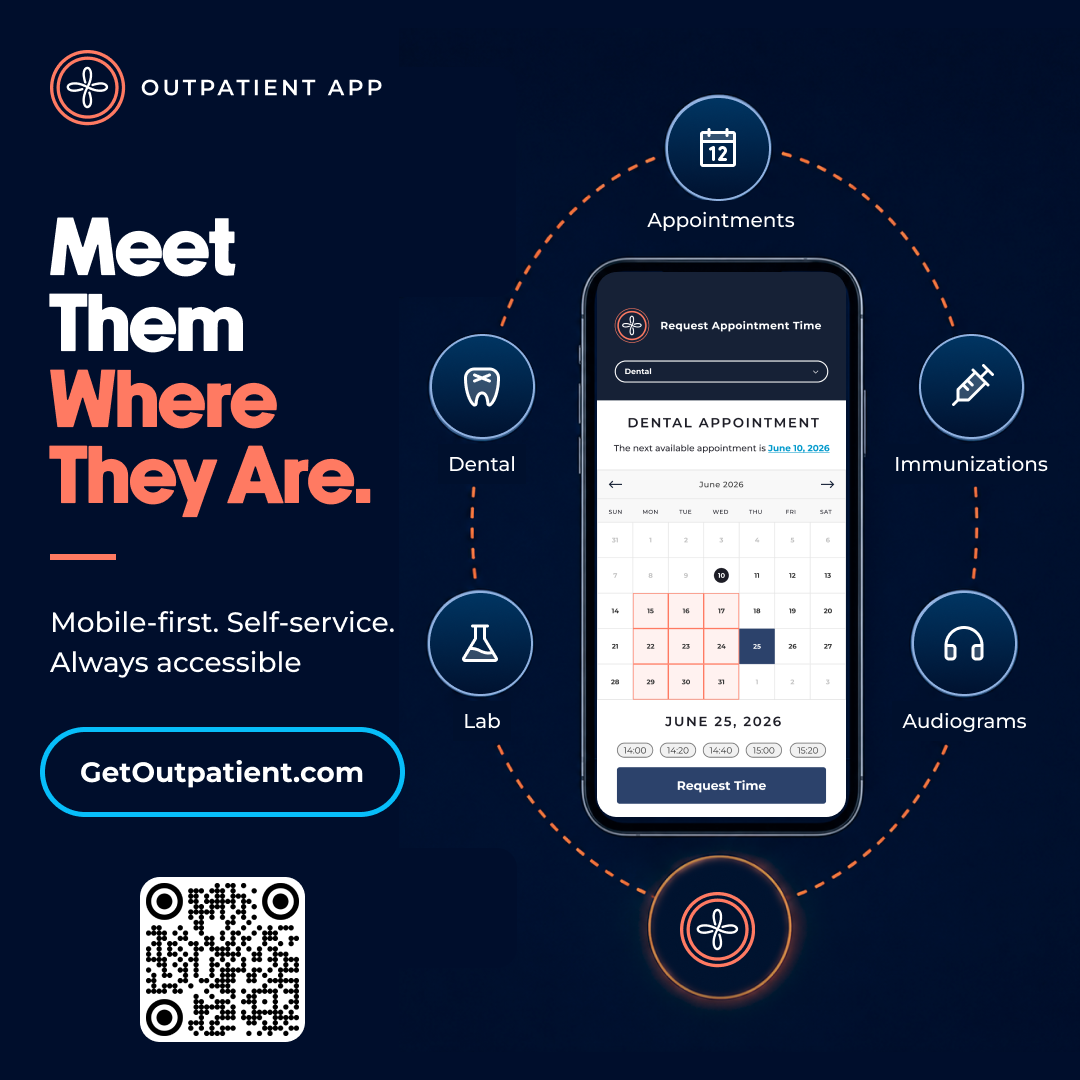
Outpatient App helps military healthcare teams meet service members where they are with mobile-first readiness scheduling, automated communication, and self-service workflows.
Instead of relying on phone calls and back-and-forth emails, service members can receive digital prompts, schedule appointments, view upcoming requirements, and respond through intuitive mobile experiences.
For clinics and readiness teams, that means less manual coordination, fewer missed connections, and better visibility into appointment status, compliance progress, and readiness gaps.
Outpatient App supports workflows across key readiness needs, including:
- PHA scheduling
- Occupational health exams
- Dental readiness
- Labs
- Immunizations
- Audiograms
- Medical readiness tracking
- Provider and care team coordination
The result is a smoother experience for service members and a more efficient system for the teams responsible for keeping them ready.
Friction kills engagement
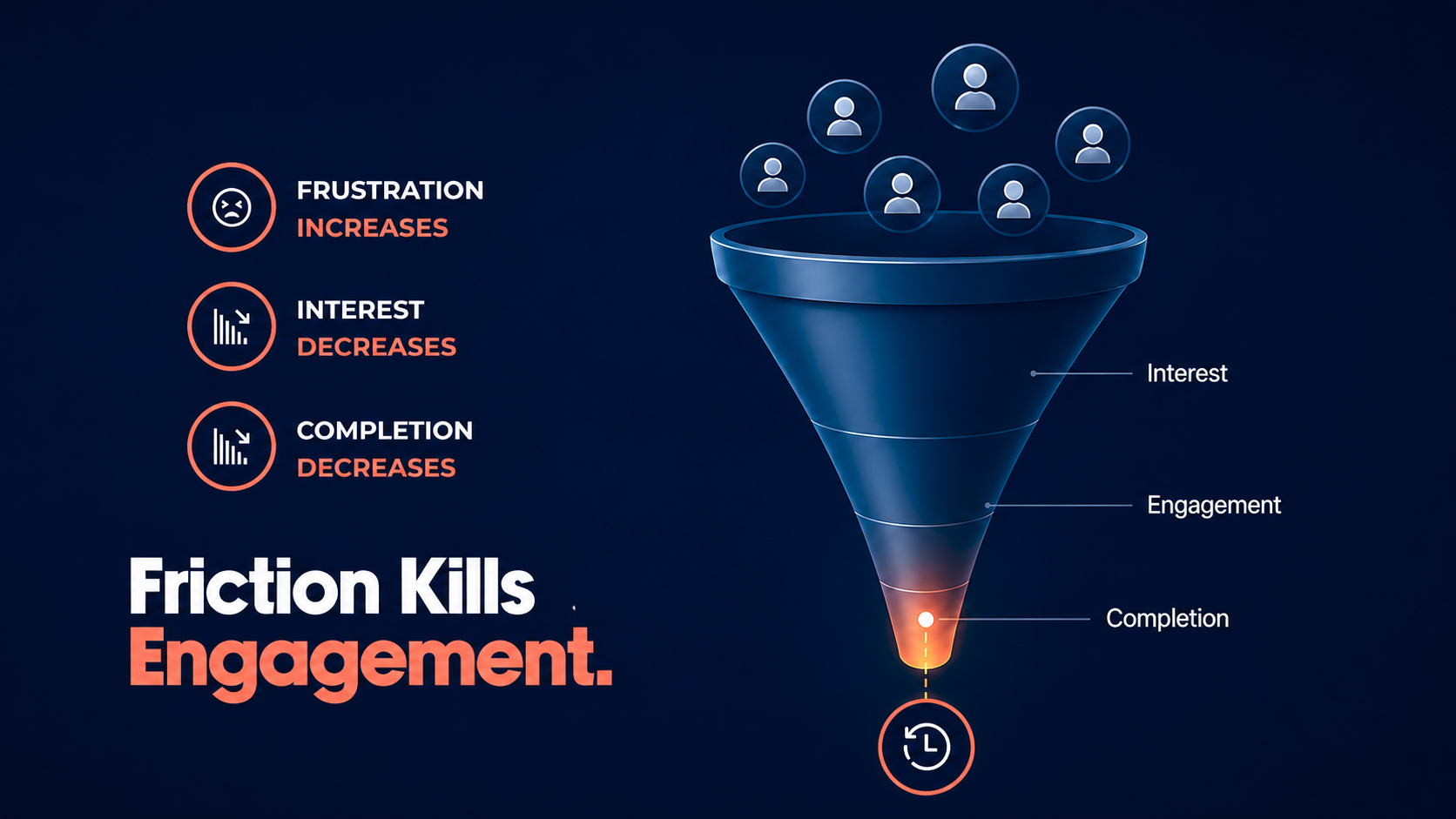
When systems are too manual, engagement drops.
Appointments get missed. Compliance drops. Frustration rises.
But when the experience is simple, mobile, and available on demand, service members are more likely to complete the task. Staff spend less time coordinating manually. Leaders gain better insight into readiness progress.
That is how readiness scales.
Not by adding more phone calls.
Not by creating more inbox traffic.
Not by asking service members to work around outdated workflows.
Readiness scales when the process is built around how people actually communicate today.
Mobile-first readiness is the future
The next generation of service members does not want more administrative complexity. They want clear, simple, digital access to the things they need to complete.
They want to use their phones.
They want to text, tap, schedule, confirm, and move on.
They want to do it on their own time.
Outpatient App makes that possible by helping military healthcare organizations modernize readiness workflows around the people who use them every day.
Because when service members can engage where they are, when they are available, and in the way they already communicate, readiness becomes easier to manage, easier to complete, and easier to scale.
One Last Point – AI Automation technology is behind this whole process, but notice we didn’t talk about the technology. Just that it works. That’s the win – it just works!