
CASE STUDIES
Development. Testing.
Deployment. Documented.
Explore the specific work behind each project: what was developed, what was tested, and what is documented about production use, with links to the public contract records.
Explore the case studies
Readiness Scheduling and Coordination↘
PHA scheduling & management↘

Virtual Health Management↘
Individual Medical Readiness↘
Each project has its own scope and deployment history. An SBIR award documents funded work; it does not by itself establish testing, operational deployment, or current use.
Historical project references do not imply government endorsement.
01 / Readiness Scheduling and Coordination
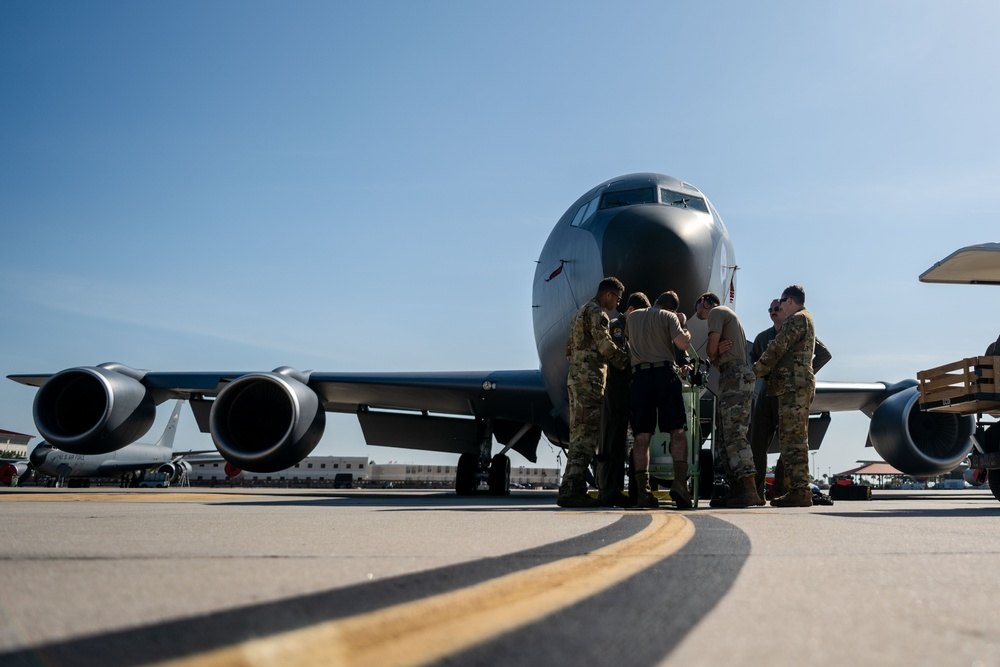
MacDill Air Force Base
A Phase III transition for readiness scheduling.
MacDill awarded Outpatient an SBIR Phase III contract for the PHA Smart Alert Tracking System. Outpatient implemented its Readiness Innovation Scheduling System (RISS) at the base.
This contract represented the first time an SBIR Phase III was awarded to a health company.
The MacDill Phase III system went live in less than one month.
What was built / delivered
The contracted system is PHA Smart Alert Tracking. Company materials describe RISS appointment-request, staff-review, and scheduling workflows.
What was tested
During onboarding, MacDill added three readiness appointment types: Security Forces PCM, spirometry, and audiograms.
Past production
MacDill has used the Readiness Innovation Scheduling System (RISS) in production for at least 18 months.
Current production
MacDill uses RISS for 13 readiness appointment types.
- Request readiness appointments
- Review incoming requests
- Coordinate scheduling
Phase III contract awarded April 7, 2025.
02 / PHA scheduling & management
Travis Air Force Base
From PHA requests to readiness scheduling.
Outpatient developed PHA scheduling and tracking workflows with the 60th Medical Group. The Phase II award is titled PHA Smart Alert Tracking System; later scheduling use is documented separately from that development award.
What was built
Member appointment requests, staff review and approvals, fly/non-fly PHA time slots, and request-status tracking.
What was tested
Outpatient’s April 2023 account describes smaller-audience testing in summer 2022 before the broader PHA rollout.
Past production
For 6–18 months, Travis used Outpatient for scheduling and smart notifications for fly and non-fly PHA, occupational health, travel medicine, SERE-ECAC, and SHPE readiness appointments.
Current production
David Grant Medical Center (DGMC) at Travis directs service members to the Outpatient App to request Continuous Medical Readiness (CMR) appointments. DGMC staff use the app to communicate with service members and manage the revenue cycle and accounting data used to measure the value of medical activities completed during those appointments.

- Request a time slot
- Review and schedule
- Track the request
Historical PHA rollout and published PHA/CMR scheduling guidance.
03 / Virtual Health Management
JBSA clinical teams
Two projects with JBSA medical staff
Under AFWERX/AFRL SBIR Phase I and II awards to Outpatient, participating teams at Wilford Hall, BAMC, and Reid Clinic helped inform Virtual Health Management development. These were innovation projects, not direct operational appointment-booking contracts with those facilities.
What was built
1. Virtual Health Management
Clinical teams could route consults, send secure messages, and schedule on-call providers and medical staff.
2. Occupational Health
Readiness checklists helped staff track occupational health requirements.
What was tested
JBSA medical staff personnel tested the staff scheduling system. VA contractor personnel also tested the system. JBSA implementations ran only in test environments using synthetic data.
Past production
Never deployed into production at JBSA. No real patient data was used.
Current production
Not live at JBSA. This case study describes completed historical development work.

- Route provider consults
- Connect on-call teams
- Track occupational health
Built and tested with synthetic data. Not a current JBSA deployment.
04 / Individual Medical Readiness
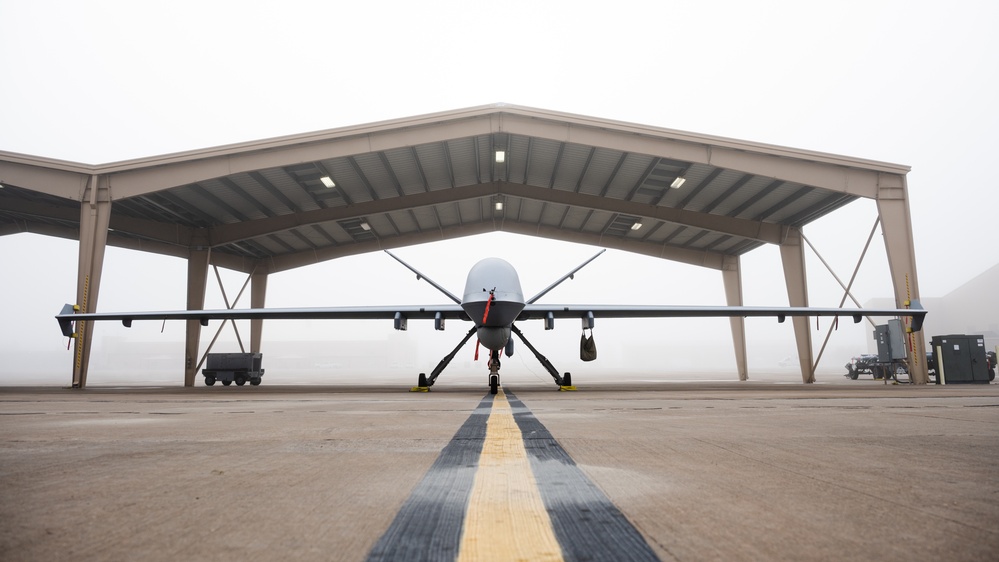
Holloman Air Force Base
Coordinate the steps toward medical clearance.
The 2020 Phase II award explicitly identifies the 49th Medical Group at Holloman. Outpatient’s historical case study describes a medical-readiness system developed to coordinate deployment clearance.
What was built
Role-based readiness checklists, medical-clearance tracking, reminders, and reporting for members, medical staff, unit deployment managers, and commanders.
What was tested
Service members and unit deployment management (UDM) personnel from AMXS, along with personnel from the Holloman Medical Readiness Operations Squadron, tested the readiness automation workflows.
Past production
The system never entered production at Holloman. Testing used no real patient data.
Current production
The system is not live at Holloman. The development and testing work is complete.
- Identify requirements
- Coordinate readiness tasks
- Track medical clearance
Readiness workflow tested at Holloman.
YOUR MISSION. CONNECTED.
Bring Outpatient
to your team.
Let’s talk about the workflows that matter to your organization.
Book a demo